
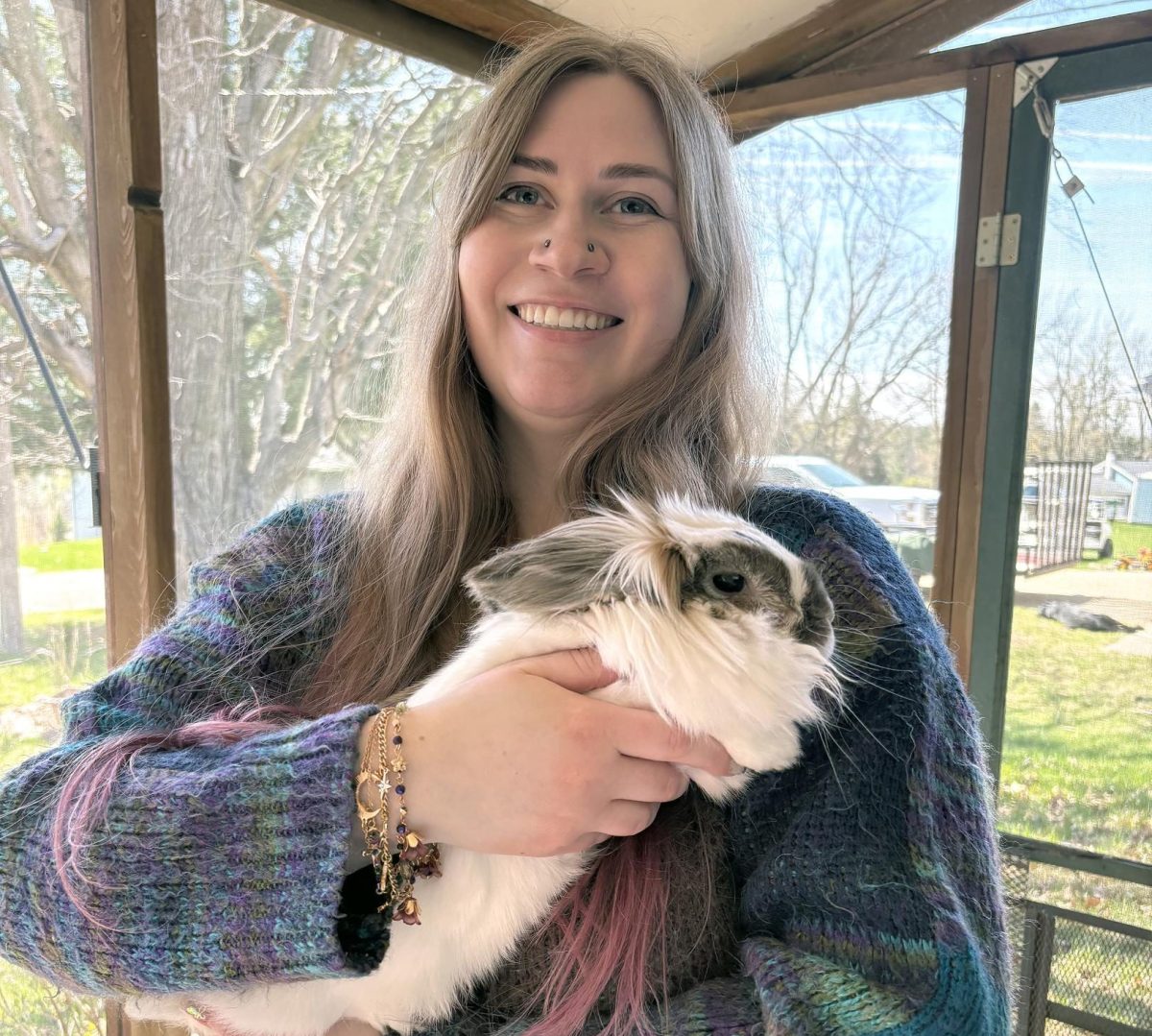
What started as an attempt to save a single injured rabbit has grown into a full-scale rescue effort, and one that continues to expand as its founder works to change how people understand and care for rabbits.
Amanda Messegee, founder of Lucky Clover Rabbit Rescue, said the organization began unexpectedly while she was living and going to school in Rapid City, South Dakota. What she initially thought would be a one-time rescue quickly became something much larger.
“I found out there were tons of rabbits at a house nearby and they were being abused,” Messegee said.
The discovery led her to a hoarding situation that required the removal of dozens of rabbits from unsafe conditions. When the property changed hands and no long-term plan existed for the animals, Messegee stepped in.
“They said the best they could do was take them to the shelter,” she said. “I had a pretty bad feeling the bunnies were going to get euthanized.”
This moment marked the beginning of Lucky Clover Rabbit Rescue. The rescue is named after one of Messegee’s rabbits, Clover, who passed away in 2023.
From crisis to mission
Messegee said that the early days of the rescue were overwhelming. Many of the rabbits were sick, malnourished, and required immediate medical care. With help from friends and local veterinarians, she began separating the animals and stabilizing their condition.
“Starting the rescue off with a hoarding house is pretty much like the worst case scenario for any rescue,” she said.
One of the rescued rabbits was pregnant and later gave birth to ten babies, all of which survived.
“Usually litters don’t have super good survival rates, especially when they’re coming from that kind of environment,” Messegee said. “So I was really happy that they all made it.”
Six of those rabbits have since been adopted, while a few remain in foster care.
Another rabbit, Spike, left a lasting impression on Messegee. A black rabbit from the original rescue, Spike was one of the hardest to place due to common adoption biases.
“Black bunnies are usually the hardest to get adopted out,” she said.
But just before Messegee moved to Iowa from South Dakota, Spike found a home.
“We watched her just kind of slowly start moving around,” she said. “She would come back over to us like she was asking if it was okay to keep exploring.”
By the time they left, Spike was running around her new home.
“It was just like, yeah, we’re doing the right thing,” Messegee said.
A new chapter in Iowa
Messegee relocated to Iowa after her boyfriend accepted a job with Collins Aerospace. While the move meant leaving behind an established support system, she said it did not change her commitment to the rescue.
“It was tough moving away from everything we had built,” she said.
Now based in the Solon area, she is working to rebuild that network while continuing rescue operations and expanding outreach nationwide.
At the core of her mission is education, particularly around responsible ownership and the importance of adopting rather than purchasing rabbits from pet stores.
“I’m really hoping to get the word out to people about why spaying and neutering is so important,” Messegee said.
She said many rabbits sold in stores come from breeders, where conditions are often unknown to buyers.
“I don’t think people usually realize what goes on behind the scenes,” she said.
Changing misconceptions
Messegee said one of the biggest challenges is correcting common misconceptions about rabbits.
“I think a lot of the time it’s seen as having a hamster or guinea pig,” she said.
In reality, rabbits require significantly more care. They need space to move, regular social interactions, and access to specialized veterinary care.
“They’re honestly more similar to having a pet cat than like a rodent,” she said.
Rabbits are also highly social animals and often benefit from companionship.
“If they’re not getting a lot of attention, it’s usually better for them to have a partner,” Messegee said.
Her rescue also works to reduce overpopulation, which she said unfortunately increases heavily around holidays like Easter when rabbits are often purchased impulsively.
From rehabilitation to adoption
Much of the rescue’s work focuses on rehabilitation. Because many rabbits come from neglectful situations, building trust is often the first step.
“They tend to take longer to open up because they’re prey animals,” Messegee said.
Foster homes play a key role in that process. Messegee said they provide individualized care, socialization and, in some cases, litter training.
“Some of our fosters have really good success with litter training,” she said.
The adoption process is designed to ensure the best fit between rabbit and owner. Prospective adopters complete an application, undergo a home check and review educational materials covering care, diet and medical emergencies.
“We try to give them as much info as possible, so they’re prepared,” she said.
If an adoption does not work out, the rescue allows animals to be returned.
“We don’t want them to be released or anything like that,” Messegee said.
Ongoing challenges and support
Despite its success, Lucky Clover Rabbit Rescue faces ongoing challenges, particularly with funding and veterinary care.
“It’s just entirely me or donations,” Messegee said.
While donations often include supplies such as hay and bedding, medical expenses remain a significant burden. Spaying and neutering can cost hundreds of dollars per rabbit, making it difficult to scale the rescue’s efforts.
Still, Messegee said the reward of seeing rabbits recover and find homes makes the work worthwhile.
“The best part for sure is when they get adopted,” she said.
As the rescue continues to grow in Iowa, Messegee is looking to build a stronger local network of volunteers and foster families.
“We definitely could use help out here,” she said.
For Messegee, the mission remains simple.
“Just getting to see them heal and have a chance at life,” she said.
For those interested in getting involved with the organization or are looking for assistance, they can connect with Messegee at [email protected].