To be an engineer is to be innovative, to be intelligent, to be a problem-solver. How can the youth get a head start on enhancing those skills?
It’s easy. Have them build a robot.
In 2009, there were 24 Iowa-based teams, and now there are over 160 teams statewide that compete against one another. And all those teams have the same goal of pushing the next generation of engineers forward.
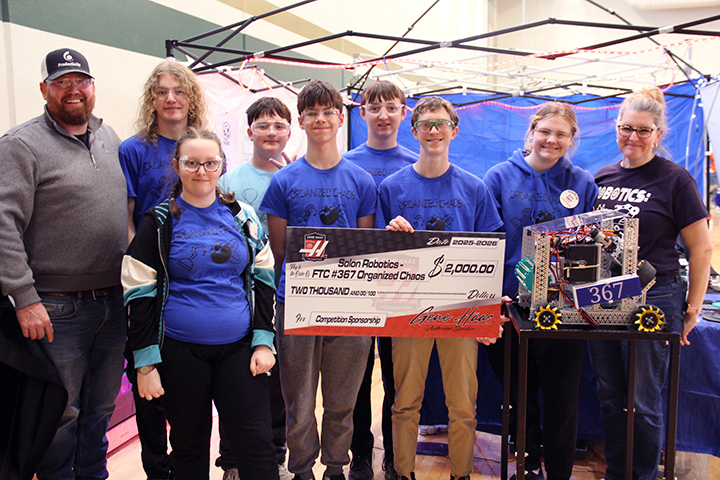
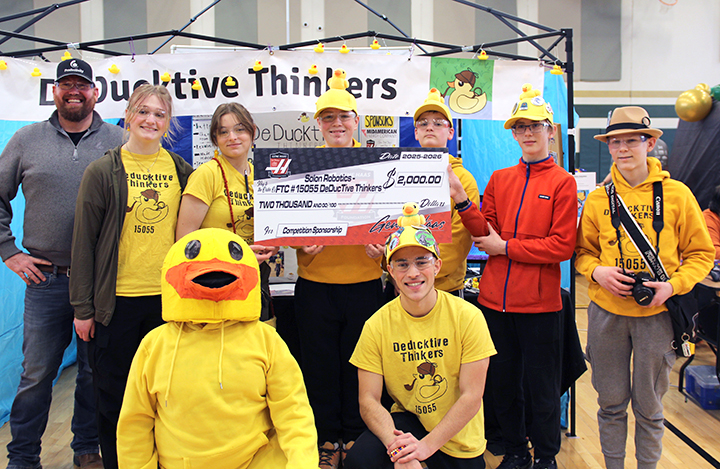
Since its startup in 2007, Solon High School has added two more teams, bringing its total to three: Organized Chaos, Mechinaries, and Deducktive Thinkers. Each team has between six-to-12 members ranging from seventh graders to high school seniors — the high school runs the club, but middle schoolers can join.
Teams are mixed up between the newcomers and the veterans so that those who are versatile in their skillset can help less experienced members develop their all-around arsenal. Only one robot can be built per team, forcing teamwork, trust, and communication.
“You take past failures and you pass that information on to the kids,” said Phil Kramer, an assistant coach. “You cut weeks of build time out because of that experience. That knowledge base of how to go forward or how to put it together.”
The clubs are funded by its sponsors, including MidAmerican Energy, Gene Haas Foundation, and several others. The competition robots typically cost between $3,000 to $5,000, depending on how intricate the robot is.
Solon’s three robotics teams are a part of the 34-team Machu Picchu League competing against other teams in its athletic conference and beyond. They all met at Iowa City West High School on Saturday, Feb. 14, for its conference tournament to decide which 15 teams would advance to the state tournament.
The support the robotics community gives to one another is unique. Several members in attendance wore costumes representing its teams, from ducks to pirates to bacon. Members also went around to rival teams to check out their robots and play games with one another.
Teams accumulated points between competitions where robots have to shoot balls into a goal in a certain color order, by winning awards based on judging. And while all three Solon-based robotics teams failed to place in the top 15 for a state tournament appearance, the purpose of the club is bigger than a top prize.
“It teaches a lot of great skills just to have,” said Solon Robotics mentor Abby Kramer. “I think it’s very helpful. Even if you don’t go into engineering, those mechanical skills that you do pick up are going to stay with you for a long time.”